Hello AI Enthusiast,
This week, OpenAI made a serious push into how teams actually work. Workspace Agents turn ChatGPT into a shared tool your whole team can build, run, and improve together. Images 2.0 brings a big upgrade to visual generation, with better precision and multilingual text that finally works. Meanwhile, Anthropic introduced Claude Design for visual creation through conversation, and OpenAI gave Codex a much longer to-do list. AI is moving from personal assistant to team infrastructure, and this week shows what that starts to look like.
The Big Picture 🔊
ChatGPT Is Becoming a Coworker, Not Just a Chat Window

OpenAI launched two updates that push ChatGPT further into daily work. Workspace Agents let teams build shared AI agents that handle multi-step workflows, connect to tools like Slack, run on a schedule, and keep working when you're away. ChatGPT Images 2.0 brings a major image generation upgrade with better precision, stronger multilingual text rendering, and more visual styles. Both are available now for Business, Enterprise, and Pro users.
|
||
|
Workspace Agents is the more interesting announcement here. The move from personal chatbot to shared team tool is a meaningful shift: instead of everyone prompting ChatGPT individually, a team builds one agent together, improves it over time, and runs it across Slack and ChatGPT. That's closer to how companies actually work. Images 2.0 is a solid upgrade, especially for non-English text in images, but it feels more like catching up than a leap forward. OpenAI is clearly trying to own more of the workday, not just the search bar. |

Claude Can Now Help You Design, Not Just Write

Anthropic Labs introduced Claude Design, a tool that uses vision AI to help users create and refine visual designs through conversation. You describe what you want, Claude generates it, and you iterate together. It also supports team collaboration, so multiple people can give feedback in the same workflow. It's an early experiment from Anthropic's Labs team, aimed at making design more accessible without requiring specialist tools.
|
||
|
Design tools have been hard for AI to crack, mostly because the feedback loop is faster and more subjective than text. Claude Design tries to solve that with a conversational approach: you describe, it generates, you react. The collaboration feature is the smart addition here. Most design work involves more than one opinion, and building that in from the start suggests Anthropic is thinking about real workflows, not just demos. Worth watching as it matures. |

OpenAI's Codex Gets a Big Upgrade and a Longer To-Do List

OpenAI updated Codex with a significant set of new capabilities. It can now operate your computer alongside you, connect to more apps and tools, remember your preferences over time, and handle long-running software development tasks without constant supervision. The update pushes Codex closer to a genuine AI coworker for developers, rather than a code autocomplete tool.
|
||
|
A year ago, Codex was smart autocomplete. Now it runs your computer, remembers your preferences, and handles tasks across sessions. That's a real shift. For developers, the key question is trust: how much can you hand off before you lose track of what's actually happening in your codebase? The productivity gains are real, but so is the risk of accepting changes you don't fully understand. The best use case is probably the boring stuff, the tasks you'd do yourself but keep postponing. Start there. |

AI coding tools are getting more capable fast. But most teams aren't ready to use them well, and that gap is expensive. Our Corporate AI Training helps your team figure out where these tools actually add value and where human judgment still matters.
Bits and Bobs 🗞️
The White House plans to give U.S. federal agencies access to Anthropic's Mythos model to help identify software vulnerabilities and strengthen cybersecurity across government systems.
Perplexity’s Personal Computer integrates AI orchestration into your Mac to manage local files, apps, and web tasks securely and continuously.
Google upgraded AI Mode in Chrome, letting users open web pages side-by-side with AI assistance for easier comparison, follow-up questions, and context-aware search across open tabs.
Google's Gemini app now uses Personal Intelligence to understand your preferences from linked Google apps automatically, so image creation requires less detailed prompting.
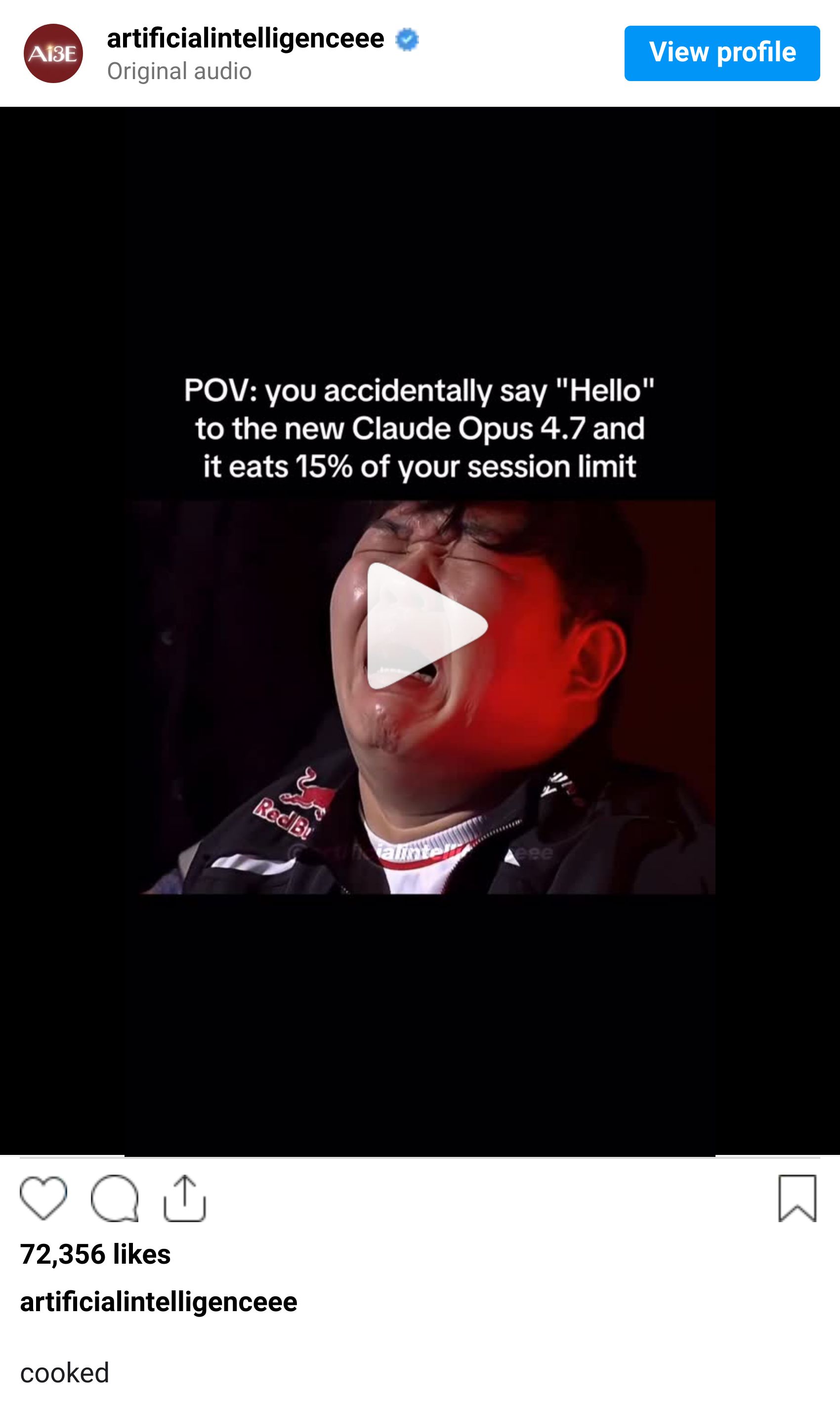
Anthropic released Claude Opus 4.7, with improvements in advanced coding, vision, and reliability over Opus 4.6. It's now available across multiple platforms.
OpenAI introduced GPT-Rosalind, a new model built for life sciences research, with stronger reasoning across biology, chemistry, and genomics to help scientists generate insights and plan experiments faster.
From Our Founder’s Channels 🤳
In his recent LinkedIn post, Gianluca Mauro reminds us that despite being extremely useful, the AI frontier is still jagged and AI is a very weird technology. Read it here.

LOLgorithms 😂
That's a wrap on our newsletter! Before you go, here’s a quick recap of our offerings:
AI Academy Membership: Get 12 months of access to all our cohort-based programs and on-demand courses.
AI Agent Bootcamp: Accelerate processes and solve business problems by building AI Agents, without coding.
Practical Introduction to ChatGPT: A free course on using ChatGPT confidently, understanding its workings, and exploring its potential.
Customized Corporate Training: Equip your team with the skills they need to unlock the potential of AI in your business.
Catch you next week! 👋
